 Español
 Português
Yoko and His Hat: Environmental Enrichment, Stimulation, and Well-Being
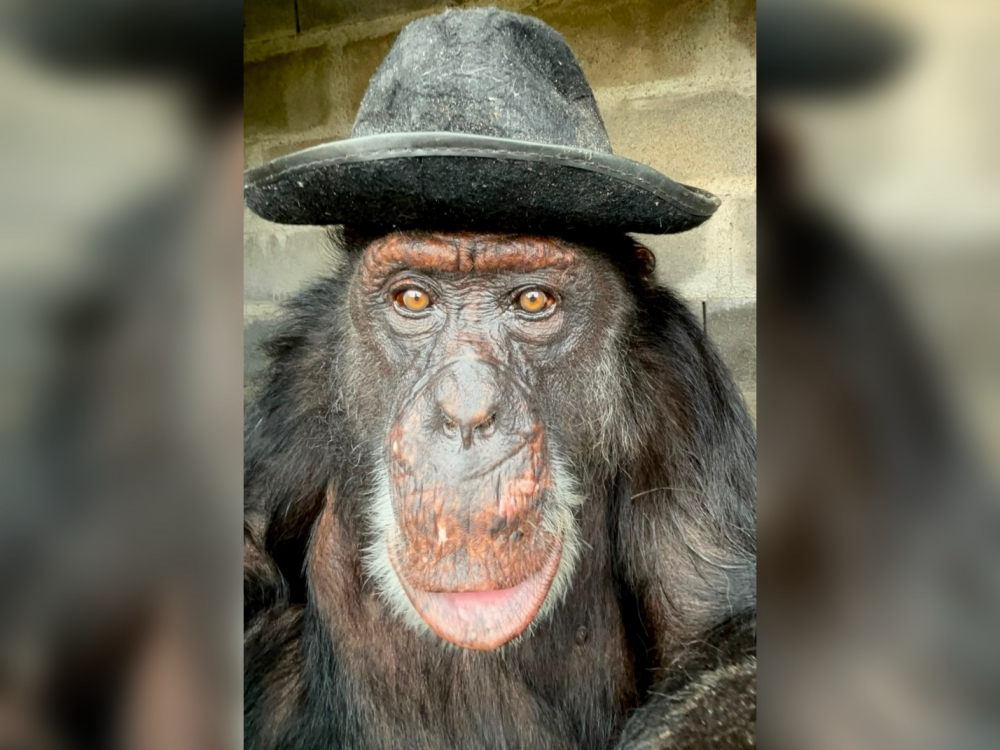
Yoko was transferred from Colombia to the Great Apes Sanctuary of Sorocaba, in São Paulo, Brazil a year and a half ago. Over the past few weeks, he has shown great interest in using a hat—an object offered by the Sanctuary team as part of the environmental enrichment program being developed for him.
Yoko’s environmental enrichment plan was designed with respect for his preferences, life history, and high degree of humanization. In addition to sparking his interest, the hat serves as a form of distraction and stimulation, allowing him to explore and interact with his environment in a way that he enjoys.
The use of objects similar to those used by humans can be part of enrichment for primates under human care, especially when such items hold meaning or arouse a particular individual’s interest. After all, chimpanzees have advanced cognitive abilities, natural curiosity, and remarkable skills for exploring and manipulating objects.
Most importantly, it is essential to understand that every animal has their own history and preferences. Therefore, good environmental enrichment is not simply about offering objects; it involves observing the animal’s responses and adapting activities to their needs, always prioritizing their safety and well-being.
A Little About Yoko’s Story
Yoko is an elderly and very special chimpanzee, with a past marked by suffering and isolation. As an infant, he was raised as a pet. Years later, he was sold to a circus, which eventually abandoned him inside a van at the Venezuelan border.
After being rescued, Yoko spent many years at a small zoo in Colombia, once again in isolation. He was later transferred to a larger zoo that housed other chimpanzees, but he continued to live apart from them. During one attempt to bring him closer to the group, he suffered a serious injury, losing part of the cartilage in his ear.
This entire journey has left deep marks on Yoko. His approach to other chimpanzees is a process that requires great care. It is necessary to respect his pace, his needs, and the boundaries of every individual involved. For this reason, it does not happen overnight; it requires ongoing monitoring, knowledge of the species’ behavior, and, above all, patience.
Rebuilding social bonds after a life marked by isolation is a major challenge. Every step forward, however small it may seem, represents an important move toward giving Yoko a life with more opportunities for interaction and well-being.
Watch Yoko at the Sanctuary: https://youtu.be/xhQZI46Btpw
Images and content by:
Camila Gentile, veterinarian at the Great Apes Sanctuary of Sorocaba
Leonardo Espindola, biologist at the Great Apes Sanctuary of Sorocaba
Maria Fernanda Statkevicius, veterinarian at the Great Apes Sanctuary of Sorocaba
Meire Mi, photographer and coordinator at the Great Apes Sanctuary of Sorocaba

Origin: Biopark Ukumari (Colombia)
Sanctuary: Sorocaba, São Paulo/Brazil
News - More News
Defying conflict to track the world’s rarest chimpanzees

Overlooked breadth of chimpanzee culture

Children and Monkeys Share a Common Understanding of Geometry

Great apes: what we know about their cognition, cooperation and curiosity after two decades of research

Study demonstrates long breastfeeding periods in orangutans

Residents' Stories
Longevity and Quality of Life


Origin: Chimpanzee Breeding Marco Schwartz (PR)
Sanctuary: Sorocaba, São Paulo/Brazil
The social integration process of #chimpYoko has advanced!

Origin: Biopark Ukumari (Colombia)
Sanctuary: Sorocaba, São Paulo/Brazil
Overcoming difficulties


Origin: Le Cirque Circus
Sanctuary: Sorocaba, São Paulo/Brazil
The GAP Project
GAP is an international movement whose main objective is to fight for the basic rights to life, liberty and non-torture of non-human great apes - Chimpanzees, Gorillas, Orangutans and Bonobos, our closest relatives in the animal kingdom.
Development and Hosting